Last Update
Nov. 28, 2020
Organisation
Unknown
Gender
Male
Ethnic Group
Persian
Religoius Group
Shia
Province
Tehran
Occupation
Journalist
Sentence
Execution (not carried out) and one-year-six-months imprisonment
Status
In exile
Institution investigating
Ministry of Intelligence
Charges
Espionage
Propaganda against the regime
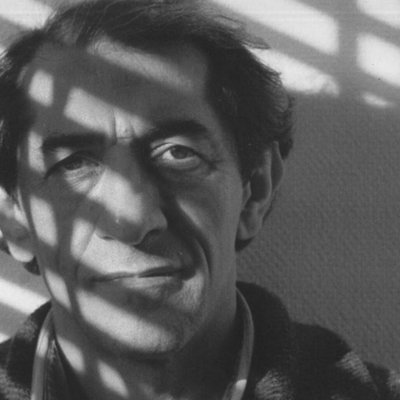
Faraj Sarkohi In exile
Sarkohi was born on November 3, 1947 in Shiraz; as an adult and as an established and prominent writer, he was a member of the Iranian Writers' Association and was involved in writing and collecting signatures for the association’s famous open letter of protest, entitled: “We Are Writers."
Faraj Sarkoohi lived in Shiraz during his school years and went to Tabriz to continue his education. He studied social sciences and Persian literature at the University of Tabriz.
During his university years, he contributed to the publication of several literary and artistic publications, including Adineh and the Mahd Azadi Literary Supplement. Through this work he became friends and worked with the writers and literary figures Samad Behrangi, Kazem Saadati and Gholam Hossein Saedi.
In 1966, Faraj Sarkouhi was imprisoned for three months. A year later, in 1967, he was imprisoned again for about a year on charges of “participating in student movements against the Shah of Iran.” He was arrested again in 1971 and sentenced to 15 years imprisonment. Sarkohi was released from prison along with other political prisoners in the days following the success of the 1979 Islamic Revolution.
During the short period of relative freedoms after the Islamic Revolution, Sarkohi worked as a journalist and columnist for the Tehran Mosour / Tehran Illustrated and Iran newspapers. However, after the repressions of 1981, the widespread arrest of critics of the Islamic Republic and the closure of non-governmental publications, Sarkohi removed himself from public life and withdrew to his home for several years.
In 1985, Faraj Sarkohi founded Adineh together with Sirus Alinejad, Masoud Behnoud and Gholam Hossein Zakeri. Sarkohi wrote numerous articles for the magazine on literary, cultural and social issues, and he met and interviewed a variety of Iranian cultural and political figures such as Hossein Alizadeh, Ahmad Shamloo, Mehdi Akhavan Sales, Parviz Natel Khanlari, Amir Hossein Arianpour, Houshang Golshiri, Alireza Espahbod and Mehdi Bazargan.
Sarkohi was also involved in the formation of the Council for the Review of Persian Writing and Calligraphy, and the publication of its results in the Adineh magazine.
He also worked to restart the activities of the Iranian Writers' Association after the repressions of 1981.
In 1994, the Iranian Writers' Association prepared and published the text of the “We Are Our Writers” open letter, which also later became known as "The Letter of 134," after the number of signatories to the letter. In this text, 134 Iranian writers, literary critics, translators, and poets called for freedom of speech and expression and protested government censorship.
Sarkohi was highly influential in the protest, being one of the eight members of the board who drafted the letter and helped to collect signatures. The other seven members of the board included Mansour Kooshan, Houshang Golshiri, Sima Koban, Mohammad Mokhtari, Reza Braheni, Mohammad Khalili and Mohammad Mohammad Ali.
Faraj Sarkohi was also involved in the so-called Armenian Bus Case. This was a failed assassination plot orchestrated by the Irnian Ministry of Intelligence in which a group of Iranian writers, translators and journalists, who were invited to travel to Armenia for a conference, were nearly killed while on a bus en route. This plot was part of the Chain Murders, a series of political assassinations carried out between 1988 and 1998 by the Iranian government against Iranian academics, cultural figures and critics of the Islamic Republic.
On August 6, 1996, Sarkohi was one of 21 Iranian cultural and literary figures who had intended to travel to Armenia for a cultural exchange conference with Armenian writers during which they would hold sessions of poetry recitals and lectures.
The passengers onboard the Tehran-Armenia bus included Mohammad Ali Spanloo, Ali Babachahi, Masoud Behnoud, Sirus Alinejad, Amir Hossein Cheheltan, Shahriyar Mandanipour, Bijan Najd, Fereshteh Sari, Mansour Kooshan and a number of other cultural and literary figures.
On the journey to Armenia, the bus driver, an intelligence officer named Khosrow Barati, on the orders of the Ministry of Intelligence tried to crash the bus into the bottom of the Heyran Pass by accelerating off the edge of the road and jumping out of the bus at the last moment. However, two passengers, Masoud Toofan, who took control of the wheel, and Shahriyar Mandanipour, who pulled the handbrake, were able to take control of the bus and bring it to a stop before it crashed.
Some of the passengers on the bus, including Masoud Toofan and Masoud Behnoud, later spoke to the media about that day. According to Massoud Behnoud, after the bus stopped and the passengers disembarked, police officers from a nearby police station arrived and transferred them to Astara Prison. “Once there [Astara Prison], the writers were threatened and then told to remain silent about the incident”, after which they were released.
The film director Mohammad Rasulov later made the film “Manuscripts Do Not Burn” based on this event.
Shortly after the Armenian Bus incident, Sarkohi was abducted by agents from the Ministry of Intelligence at Mehrabad Airport as he was trying to travel to Germany to visit his family.
Sarkohi's family in Germany were unaware of what had happened to him for a long time. In response to news of the arrest, Iranian officials claimed that he had not been arrested but that he was in Europe. Sarkohi instead spent 48 days in a secret Ministry of Intelligence detention center and, after being subjected to torture, he was forced to attend a press conference and give a false confession in which he stated that he had been in Europe but had since returned to Iran.
A few weeks later, he was arrested once again on charges of “illegally leaving the country.” In the short time between these two arrests, Sarkohi wrote a letter to his wife in Germany, which later became known as “Faraj Sarkohi's Letter of Suffering.” In this letter, Sarkohi told his wife about the repressions and coercion that members of the Iranian Writers' Association faced and he revealed the truth about his arrest and imprisonment. After Sarkohi’s second arrest, his wife published the letter without his knowledge. The publication of Sarkohi’s letter caused a great deal of controversy.
Faraj Sarkouhi later described details of the torture he suffered during his first prison sentence: “The most significant form of physical torture that was used was whipping the soles of prisoners’ feet. However, they also had a form of psychological torture where they would follow people for some time before their arrest. They recorded all the details of that person's life. They even eavesdropped on me in the bedroom. Naturally, in a place like that the interrogator almost becomes a god-like figure who knows everything about you and you reach a point where, even when you close your eyes, you still see your interrogator’s face. It was under these physical and psychological tortures that I was forced to do a televised interview. The interview was never broadcast and I am probably the only one who claims that the interview even took place. In that interview, I was forced to confess to being an agent from the British and French embassies, an agent from the Israeli Mossad, and an agent from the American intelligence service…”
After his arrest in 1996, Faraj Sarkohi was sentenced to the death penalty. However, his sentence was not enforced because of the pressure from the actions of his wife in Europe, international protests organised by human rights organizations and activists and Western governments. He was eventually charged with “propaganda against the state” and sentenced to one year and six months imprisonment.
After his release from prison in 1998, Sarkohi was able to leave Iran and travel to Germany. While in Germany, from 2000 to 2006, Sarkohi received support as part of the “Writers in Exile” scholarship programme from the German PEN Center. Since 2006, Sarkohi has been in charge of human rights affairs of the German PEN Center.
Today Faraj Sarkohi publishes articles on Iranian culture and politics in various German language magazines and publications, and he also works as a freelancer for a number of Persian language media outlets.