Last Update
Nov. 28, 2020
Organisation
Unknown
Gender
Male
Ethnic Group
Unknown
Religoius Group
Shia
Province
Isfahan
Occupation
Academic
Sentence
No sentence
Status
Killed
Institution investigating
Ministry of Intelligence
Charges
Unknown
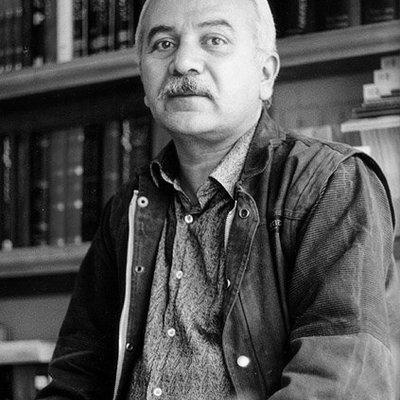
Ahmad Mir-Alaei Killed
Ahmad Mir-Alaei was a translator and writer from Isfahan, and one of the Chain Murders victims; he was killed in Isfahan on October 24, 1995. The Chain Murders were a series of political assassinations carried out between 1988 and 1998 by agents from Iran's Ministry of Intelligence against Iranian academics and critics of the Islamic Republic.
From 1969, Mir-Alaei was a university lecturer, teaching Persian literature at several universities in Isfahan including the University of Dramatic Arts, the University of Technology and the University of Art.
From 1967 to 1976, Mir-Alaei also worked as editor-in-chief for several literary and culture magazines in Isfahan, including Kitab-e Emrooz (Today’s Book), Culture and Life, Ayandegan Literature and The Isfahan War. From 1976 to 1978, Mir-Alaei was the Director of the Iran Culture House in Delhi, India, and from 1978 to 1980, he held the same post for the Iran Culture House in Karachi, Pakistan.
Ahmad Mir-Alaei's work as a translator introduced Persian-reading audiences major writers such as Jorge Luis Borges, Milan Kundera, Octavio Paz, Graham Greene and William Golding. Mir-Alaei had a natural ability and flair for translating poetry, and his translations of Sunstone by Octavio Paz and Ichor by Gavin Bantock are considered to be some of the best examples of his poetry translation work.
Other popular translations published by Mir-Alaei were The Devils, a play by John Whiting; The Circular Ruins and The Aleph and Other Stories, by Jorge Luis Borges; Sunstone and About Literature, by Octavio Paz; The Tree and Memory, by Edward Morgan Forster; Rumi's Mysticism, by Abdul Hakim Khalifa, and The Cap of Clementis by Milan Kundera.
Mir-Alaei was one of the more than 80 writers and intellectuals who disappeared as part of the Chain Murders. On the morning of October 24, 1995, Ahmad Mir-Alaei disappeared on a walk from his home to the bookstore where he worked. His body was later found in one of the alleyways of Mir Street in Isfahan, at around 10pm.
Mir-Alaei was a signatory of the open letter, entitled We Are Writers, and another public statement protesting against the arrest of Ali-Akbar Saeedi Sirjani, a writer, poet and journalist who died in 1994 under mysterious circumstances while in prison. Saeedi Sirjani had been openly critical of the Iranian government.
In addition to his cultural and literary activities, some of Mir-Alaei's relatives believe he may have angered Iranian security services because he met the outspoken writer V. S. Naipaul during Naipaul’s visit to Iran. Naipaul was a prominent British novelist and essayist born in Trinidad and Tobago. He wrote more than 30 books during his career and won the Booker Prize and the Nobel Prize for Literature.
Faraj Sarkohi, a journalist who survived the Chain Murders, has written that: “During V. S. Naipaul's visit to Iran, the Iranian government did not allow independent writers to meet with him. However, he [V. S. Naipaul] took the opportunity to travel to Isfahan to meet with [Ahamad Mir] Alaei, who had translated his book, India: The Wounded Civilization. During the meeting, and later during his stay of several days in the city, Mir-Alaei showed Naipaul a more realistic picture [of Iran] that was different to what had been shown to him by government officials. This had a decisive influence on Naipaul’s thinking and his report about his trip to Iran.”
An excerpt from the We Are Writers open letter, which was signed by Ahmad Mir-Alaei (and others) and published on October 15, 1994, said: “We are writers; that means that we write and publish our feelings, imagination, thoughts and research in different ways. It is our natural, social and civil right that our writings, whether poetry or stories or translations, or critiques, be accessible to our audience freely and without any form of constraint. No individual or institution should be able to prevent the publication of these works, under any pretext. Although, after publication, everyone should be allowed to judge and criticize the works freely. When barriers constrain our individual ability to write and think, we have to face them collectively or as part of a guild. That means we will strive collectively for the freedom of thought, the freedom of expression, and to fight against censorship. It is for this reason that we believe our collective presence will guarantee our individual freedom through the creation of an Association of Iranian Writers. So although the explanation is clear, we will say once again, that we are writers; see us as writers, and recognise our collective presence through the presence of the Writers' Association.”
During one of his interrogation sessions, Ahmad Mir-Alaei was asked by his interrogator, "Why did you sign an open letter protesting against the imprisonment of Saeedi Sirjani?" He answered: “It is my professional duty. I have done my duty and will continue to do so."