Last Update
March 15, 2021
Organisation
Unknown
Gender
Male
Ethnic Group
Kurdish
Religoius Group
Muslim
Province
Kurdistan
Occupation
Journalist
Sentence
Execution
Status
Killed
Institution investigating
Unknown
Charges
Unknown
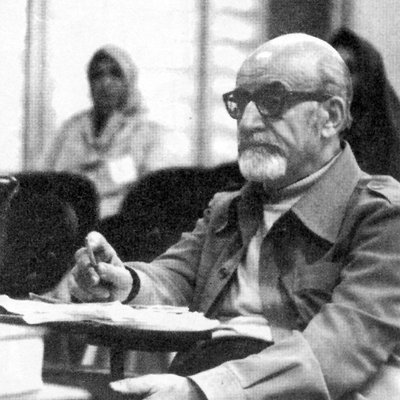
Ali Asghar Amirani Killed
Amirani had a bachelor's degree in law from the University of Tehran and was a journalist at the end of Reza Shah’s era in 1941. In 1940 he first published the Khandaniha magazine, which was published continuously for nearly 40 years.
Having lost his mother as a child and on his father’s order, Amirani traveled to the capital Tehran from Bijar in Kurdistan province to continue his education. As a teenager, he delivered newspapers to homes by bicycle, which made him interested in journalism. Amirani began writing for the magazines he distributed and eventually joined the Ettela'at (Information) newspaper, the most prestigious newspaper of the time.
Finally, in 1940, Amirani succeeded in renting a room and began publishing the Khandaniha booklet by collecting the most readable and interesting materials published in the daily magazines. This booklet became a relatively regular magazine a year later and continued to be published until 1979. Amirani's reputation was the result of 40 years of continuous publication of Khandaniha magazine.
In 1942, Qavam os-Saltaneh, the prime minister of Iran at the time, closed all the country’s newspapers and magazines and imprisoned their editors. Amirani, like others, was arrested and imprisoned for nearly two months.
A Bitter Fate after the Revolution
Sirous Amouzgar, a writer and journalist contemporary to Amirani, said of his arrest and execution after the Revolution: “Amirani wrote multifaceted articles in the last months of the previous regime, during which he also defended Mr. [Ruhollah] Khomeini [founder of the Islamic Republic]. He was arrested after the Revolution, naturally because of his acquaintances with the leaders of the previous regime. He was released on a high bail, arguing that during the previous regime he could have not acted otherwise. After being released, he went to the Revolutionary Court, [and said] you released me, but you also took all my property. He was a respectable man. He had a big house in Shemiran [a neighborhood in Tehran] and an apartment in the Saman building.”
Amouzgar continued: “They gave him 400 square meters of land in the north. He responded harshly saying, what do I need 400 square meters of land for? I am not a farmer. I am a journalist. He was arrested again and imprisoned. But this time he was executed. Amirani did not commit any crime even by the Islamic Republic's rules.”
Ali Asghar Amirani was first arrested after the Islamic Revolution on March 13, 1979, and released in the summer of 1979, but was re-arrested a few months later after protesting against the illegal confiscation of his property, He was sentenced to eight years in prison. He did not accept the sentence and appealed to the Court of Appeals, but suddenly in the Court of Appeals, under the influence of security agents and Sadegh Khalkhali, the then religious judge, his prison sentence was changed to death.
Ali Asghar Amirani was executed on June 21, 1981.