Last Update
June 18, 2020
Organisation
Unknown
Gender
Male
Ethnic Group
Unknown
Religoius Group
Shia
Province
Tehran
Occupation
Journalist
Sentence
5 years and 4 months imprisonment
Status
Released
Institution investigating
Ministry of Intelligence
Charges
Acting against National Security
Conspiring against national security
Disturbing public order
Insulting the President
Propaganda against the regime
Date of Birth
22/5/1969
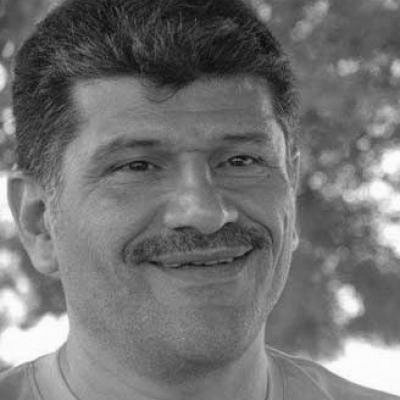
Bahman Ahmadi Amooi Released
“As a result of these revelations, I have been imprisoned and tortured, suffered more than 90 days in solitary confinement, been subjected to insults and slander and received the illegal sentence of five years and four months imprisonment.”
He spent a significant amount of this time in solitary confinement and was consistently denied visits from his family.
Bahman Ahmadi Amooi and his wife Zhila Baniyaghoob, also a journalist and a women’s rights activist, were arrested at their home on the night of June 20th 2009, in the aftermath of the disputed 2009 presidential elections. At the time, Amooi was on the editorial board of the Sarmayeh (Capital) newspaper and had written two books, which were entitled “The Political Economy of the Islamic Republic” and “How did Islamic Revolutionaries Become Technocrats?”
He was detained for writing articles and blog posts that criticized Ahmadinejad’s economic performance in Sarmayeh and for being the editor of a website that supported Mir Hossein Moussavi’s presidential bid. For a long time after the arrest, his family was unable to find out where he was being held and why - judicial authorities said his case file was not with them while interrogators told Amooi that the file was with Judge Saeed Mortazavi, Tehran’s prosecutor-general at the time. Mortazavi was later removed from his post amid accusations he was responsible for the torture and extrajudicial killing of prisoners. Despite the judicial authorities protesting otherwise, every case file has a registration number that exists at the prosecutor’s office or at the Revolutionary Court and this would have told his family where he was.
According to his lawyer Farideh Ghairat who told the Green Movement website Jaras, 20 days after his arrest, “apparently a bail was set but it was never executed. When I was informed I repeatedly went to the Revolutionary Court but each time they told me that Amooi’s case file had been lost.” Then, finally, in November, it was announced that his case was being sent to Branch 26 of the Revolutionary Court. After six months in detention, his trial began on December 12. The lower court sentenced Amooi to seven years and four months in prison and four lashes. Branch 54 of the Revolutionary Appeals Court reduced the sentence to five years and four months.
From Evin prison, he wrote a letter to various members of parliament about articles he had written that exposed financial corruption during Ahmadinejad’s administration. “Ahmadinejad’s presidency, which began in 2005, was founded on massive financial misdemeanors in the Tehran municipality that had take place under his management [as the Mayor of Tehran],” he told MPs “Only 325 billion tomans [about $325m] of that corruption was exposed, but the regime’s senior officials decided to file the case away for another fateful day. Based on the government’s claimed rate of inflation, today the figure must exceed 1,000 billion tomans ($1bn).” “Ever since Mahmoud Ahmadinejad’s assumption of power, I as a journalist, aided by my colleagues and supported by patriotic and competent experts in the country, time and time again reported all that has been pointed out above and presented a picture of today’s conditions, which was predictable then,” he added. “As a result of these revelations, I have been imprisoned and tortured, suffered more than 90 days in solitary confinement, been subjected to insults and slander and received the illegal sentence of five years and four months imprisonment.”
Until June 12th 2012, Amooi was kept at Evin Prison before being transferred to solitary confinement at the infamous Rajaei Shahr Prison in Karaj. This took place after a group of prisoners at Evin decided to commemorate the death of Hoda Saber, a journalist and political activist who died while in prison a year earlier, having had a heart attack due to a lack of medical attention. During the service, anti-riot guards in the prison attacked the ceremony and took Amooi and others away. For a long time his family was banned from visiting him. According to reports from inside the prison, solitary cells at Rajaei Shahr were in poor sanitary condition. Having received no news about him, Amooi’s family was extremely worried about him.
In response to Amooi’s transfer, more than 120 journalists signed a letter addressed to judicial officials demanding his release and that due process be properly observed with regards to the treatment of prisoners. In August 2012, Amooi wrote a letter to his wife Zhila Baniyaghoob describing conditions at Rajaei Shahr. “I wanted to feel sorry for you and myself but I immediately feel ashamed,” he wrote. “Here in the ward for political prisoners at Rajaei Shahr Prison, there are those who’ve not had visitors for years. There are those who were condemned to death but after five or six years their sentence was reduced to prison for life and now after twelve, fourteen, fifteen or twenty years in prison they hope their life sentence will be shortened.”
“Mohammad Nazari was 22-years old when he was arrested and this is his twentieth year in prison but he looks sixty,” he continued. “ Omar, Ebrahim and Khaled, members of the Democratic Party of Kurdistan [PDKI] are in the early months of their fourteenth year in prison. It was years ago when they last had a visit from their families. I ask myself: does the Democratic Party, if it still exists, remember these people who’ve been in prison for years because they were its members? Sometimes I think even the Iranian judiciary doesn’t have their names on their lists.”
“This is where 54 political prisoners at Rajaei Shahr live,” he wrote to his wife. “I write you these things so that you become familiar with the environment here and you spend your one year in prison in a better mood. A 50-meter-long hall and a three-meter-wide hallway, carpeted. Thirty-three two meter by seventy centimeter rooms. Two big air conditioners at opposite ends of the hallway that blow moist gushes of wind towards each other. And a metal door that’s locked most of the time. Our only connection to the outside world is a phone behind the metal door and we can use it to call the officer on duty upstairs. When you start your sentence at Evin, there will be five us of with a wife or sister in Evin while we’re here: Block 12, Penitentiary No. 4, Rajaei Shahr Prison.”
After a 45-hour delay, Bahman Ahmadi Amooi was released on Saturday October 4th, 2014, having served his full sentence.