Last Update
June 15, 2021
Organisation
Donya-ye Sokhan magazine
Gender
Male
Ethnic Group
Persian
Religoius Group
Muslim
Province
Isfahan
Occupation
Artist
Sentence
No sentence, failed assasination
Status
In exile
Institution investigating
Ministry of Intelligence
Charges
Unknown
Date of Birth
1961
Place of Birth
Isfahan
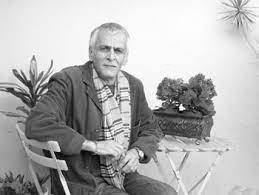
Bijan Bijari In exile
He left Iran two years after the assassination attempt.
Bijari received a bachelor's degree in Persian literature from the College of Persian Literature and Foreign Languages in Tehran in 1974.
Bijari's short stories have been published in various journals including "Adineh," "Donya-ye Sokhan," "Arghavan," "Hamshahri" and "Gardoun" since 1972. "Boredom Arena," "Compass," "Watching a Ruined Dream," "The Crimson Garden," "Repeated Stories" and "The Last House" are among his best-selling stories and novels.
Bijari was one of the signatories of the famous Statement by 134 Writers in protest of censorship and repression in Iran in 1994. The statement, also known as "We are Writers", is an open letter from 134 Iranian writers, poets, playwrights, screenwriters, researchers and translators who called for "freedom of thought, speech and publication" and protested against censorship in 1994.
The statement read: “While obstacles which face us in our thinking and writing far exceed our individual means and power, we have no alternative but to confront them through collective professional channels, i,e, to unite in order to achieve freedom of thought and expression and to fight against censorship. Hence we believe that: Our unity with the aim of creating a professional writers’ association in Iran is the precondition for our independence as individuals. All writers must enjoy the freedom of conscience to create their own work, criticise and analyse the work of other authors, and to express their experience and beliefs.”
Following the release of the statement, many signatories were arrested, tortured, threatened and banned from writing.
Bijari was also among the writers and intellectuals who were the target of an unsuccessful assassination attempt in 1996 in what came to be known as the "Armenian bus" incident.
The effort was part of Chain Murders and took place on August 6 of that year. The Ministry of Intelligence under then president Akbar Hashemi Rafsanjani intended to kill a large number of Iranian cultural figures and send them all to the bottom of a valley in a staged bus accident.
The plot was hatched when the Writers’ Union of Armenia invited members of the Iranian Writers' Association to travel to Armenia for three days of cultural exchanges and poetry and press conferences. At the time, flights between Tehran and Yerevan took place only once a week and it was not possible for the travelers to stay for a week. Traveling by bus was arranged as the alternative. Ghaffar Hosseini, a member of the Iranian Writers' Association, became suspicious at the time and expressed his concern bluntly, "They are sending you all to the bottom of the valley," but others ignored him.
Twenty-one cultural figures, including Ali Babachahi, headed towards Armenia on a bus driven by Khosrow Barati, who was later identified as an agent of the Iranian Ministry of Intelligence. According to Koushan, close to dawn, passengers realized that the bus had stopped at one of the turns and the driver was not there. He was standing a little further away. He told them that he had fallen asleep, was scared and therefore got off the bus.
The writers then remembered Ghaffar Hosseini's prediction. Despite their strong fear, they decided to continue but have two people sit near the driver to monitor him. After moving about four meters, the driver sped up, turned the bus towards the edge and jumped off the bus. Masoud Toofan immediately took the wheel and Shahriar Mandanipour pulled the handbrake and managed to stop the bus at the edge of the abyss.
In a story published in the Aftab-e Emrooz newspaper on November 11, 1999, Masoud Toofan said that after the bus was stopped, the driver returned to the bus and claimed that he had gotten off to throw stones under the bus, to slow its movement. The driver then sat behind the wheel again and repeated the same maneuver.
"I immediately jumped behind the wheel and turned it," said Toofan. "I did not dare to press the pedal under my feet, I did not know if it was the accelerator or the brake. Finally the bus stopped, one wheel hovering over the valley.”
According to Massoud Behnoud, a journalist on the bus, they then informed the police station near the scene of the accident, and the passengers were taken there. Then, Mostafa Kazemi, an infamous interrogator from the Ministry of Intelligence, intervened and transferred all the passengers to Astara prison. There, the writers were released after being threatened and forced into silence.
In the fall of 1998, as the Chain Murders of Iran continued and increased, Bijari decided to leave Iran for the United States.
Bijari continued to write stories in the United States. Two of his new books are "Watching a Ruined Dream, The Crimson Garden" and "Boredom Arena, Compass, Repeated Stories."