Last Update
March 11, 2021
Organisation
Unknown
Gender
Male
Ethnic Group
Persian
Religoius Group
Shia
Province
Tehran
Occupation
Artist
Sentence
No trial
Status
Killed
Institution investigating
Ministry of Intelligence
Charges
Unknown
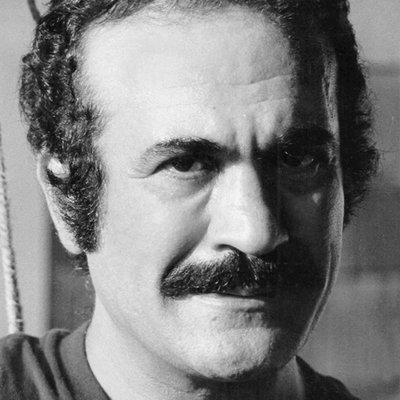
Fereydoun Farrokhzad Killed
Farrokhzad received his PhD in Political Science from the University of Munich. He became interested in composing poetry from a young age, was a member of the Munich Academy of Poetry for several years, and won numerous awards. He found his way into radio and television in Munich, Germany in 1966. On Radio Munich, he produced a series of comedy programs with music from Iran and the Middle East, and on TV Munich, he made a color television series named Alpine Streets.
Farrokhzad was the founder of several television programs in Iran, including Mikhak-e Noghreie (Silver Carnation). A number of famous Iranian artists such as Sattar, Ebi, Shohreh, Leila Forouhar, and Noshafarin”were introduced to the public through this program. He played a role in the movie Restless Hearts in 1971.
He also had a hand in music and sang popular western melodies with Persian poetry. His albums include “Someone Comes,”, “It was Night in the Desert,” “My City,” “The Sun is Coming” and “Golden Songs.”
In addition to Persian and German, Fereydoun Farrokhzad was also fluent in English and French. After the 1979 Islamic Revolution, he was accused of being affiliated with the former Shah of Iran and having Marxist views by revolutionaries and security agencies. As a result, after being fired from national television, his request to teach at university was also rejected. He was then summoned to the Revolutionary Court and spent about a month in detention.
According to Farrokhzad, despite all the difficulties, and despite being away from the world of art and his work, he did not intend to leave Iran because he loved the country and was therefore willing to endure any suffering.
Later, Fereydoun Farrokhzad talked about the reason for his ultimate departure in a radio interview: “I realized that my life was in danger and I might lose my life at any minute. I did not want to lose my life in vain. I wish to lose my life for an important cause. For culture, for art, for grand politics, for freedom ... but I did not want to disappear into a corner of a room or a prison. One must be alive and productive for as long as one can. I can be productive, so I came out of Iran.”
After Farrokhzad left Iran, at the age of 46, he held multiple concerts in various cities and countries and performed stand-up comedy criticizing the government of the Islamic Republic and the founder of the Islamic Revolution.
“One of the serious dangers of Fereydoun Farrokhzad to the rulers of the Islamic Republic was that he dealt effective blows to the people's perceptions about the regime’s personas," said Iskandarabadi, a correspondent for Deutsche Welle Persian. “Especially those who tried to be portrayed as holy by the regime, including Mr. Ruhollah Khomeini. Farrokhzad has a famous performance in which he talks about Khomeini’s Resahel,” a collection of juridical edicts or clarifications of questions put into a treatise. “Farrokhzad tried to inform the people about the issues and policies of Iran and to inspire critical thinking in society. The effort to eliminate him and eventually murder him came from this.”
After leaving Iran, Farrokhzad lived in Los Angeles for a time where he published the book In the End, Love is the Starting Word. He settled in the city of Bonn in Germany after leaving Los Angeles and engaged in political activities against the Islamic Republic.
He starred in “I Love Vienna” in 1991, which was well received by Swedes and Iranians at the Stockholm Film Festival in Sweden. Farrokhzad's last book of poetry, “I Am Tired of Dying,” was a critique of Iran's religious government.
Fereydoun Farrokhzad was stabbed to death on August 7, 1992 at his residence in Bonn, Germany. According to the German newspaper, the killers struck him in the mouth 37 times with a kitchen knife, and his body was discovered with a knife in his shoulder.
His murder was attributed to the agents of the Ministry of Intelligence of the Islamic Republic, but since the cases of the Chain Murders of Iran were never resolved, the perpetrators of the murder of Fereydoun Farrokhzad have not yet been identified. The Chain Murders were a series of 1990s assassinations of Iranian intellectuals and dissidents by the Ministry of Intelligence.
In an interview with Radio Farda, Iraj Mesdaghi, a lawyer and political prisoner, said he believed Farrokhzad's murder was “definitely carried out by agents of the Ministry of Intelligence of the Islamic Republic.” To defend his theory, Mesdaghi cited the Chain Murders as an example, emphasizing that in these murders the intelligence agents, as they called it among themselves, “knifed” their victims. This is exactly what happened to Farrokhzad and the pattern of assassination of many other opponents of the regime.
Esmail Pourrvali, an Iranian journalist and a friend of Fereydoun Farrokhzad, wrote: “The order to kill Fereydoun was issued by Reyshahri [the Attorney General] and the operations team was working under the supervision of Ali Fallahian [the Minister of Intelligence]. Fallahian delegated the murder evaluation and solution options to a team that was working under direct supervision of Saeed Emami [the Deputy Minister of Intelligence].”