Last Update
April 25, 2021
Organisation
Iranian Writers' Association
Gender
Male
Ethnic Group
Persian
Religoius Group
Shia
Province
Tehran
Occupation
Artist
Sentence
Eight years in prison
Status
Released
Institution investigating
Ministry of Intelligence
Charges
Collaboration with anti-revolutionary groups
Date of Birth
14/1/1915
Place of Birth
Rasht
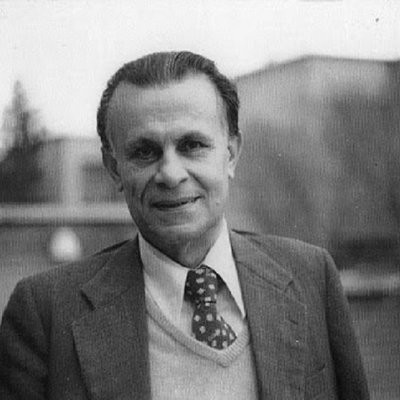
Mahmoud Etemadzadeh Released
Etemadzadeh was a member of the Imperial Iranian Army of the Pahlavi government as a young man. He was wounded on August 26, 1941 during the occupation of Iran and the bombing of Bandar Anzali. His left arm was amputated. He resigned as an army officer afterward and engaged in literary and political activities.
Etemadzadeh was hired by the Ministry of Culture in 1944, but following the coup d'etat of August 28, 1952, which led to the overthrow of the government of then Prime Minister Mohammad Mossadeq, he was fired from the Ministry.
Etemadzadeh was one of the founders of the Iranian Writers' Association in 1968. He was arrested on August 12, 1969 due to his literary and political activities. He was imprisoned for four months in Ghezel Ghaleh and Qasr prisons.
In May 1977, about a year before the 1979 Islamic Revolution, the Iranian Writers' Association began a new round of activities, in which Etemadzadeh played a key role. On November 24, 1977, he was arrested again, this time with his son Kaveh. He was released on bail on December 7, 1978.
He founded the Democratic Union of the Iranian People reformist political party on October 18, 1978.
In the spring of 1979, following the election of a new board of directors at the Iranian Writers' Association, Etemadzadeh wrote an article protesting the political approach of the association, which led to his dismissal and other members including Siavash Kasraei, Houshang Ebtehaj, Fereydoun Tonekaboni and Mohammad Taghi Boroumand from the association.
Etemadzadeh did not sit idle. In the fall of the same year, together with a number of prominent Iranian writers and artists, he formed the "Council of Writers and Artists of Iran."
In February 1982, during the widespread arrests of members of the Tudeh Party, the 68-year-old Etemadzadeh was arrested and severely tortured, to force him to deny and criticize his past and his ideas on state television. After this televised confession, he was kept in prison until 1990.
After his arrest, Etemadzadeh’s wife wrote a letter of protest to Hassan Ali Montazeri, the deputy leader of Iran, saying that she was not allowed to visit her husband and that his son had also been arrested. She wrote: "My son has been taken hostage to be used against his father. They betrayed my husband and forced him to commit idelogical suicide. Someone who sacrificed his hand for his country."
In July 1991, a few months after his release from prison of the Islamic Republic, Etemadzadeh wrote his memories of prison and the torture of security interrogators. His writings were published in December 2009, three years after his death.
He died on May 31, 2006 in Arad Hospital in Tehran due to cardiac arrest.
He wrote: "It seemed impossible to so easily lay out a 68-year-old skinny scrawny man, who more or less has a name and reputation in literature and politics, and lash his feet with a hose. Ay ay, you old fool.”
He recounts a heartbreaking account of the oppression he suffered: "The first blow that landed on the sole of my foot caused a great deal of pain that penetrated like a narrow line along my back. I had told myself that I would endure silently until the end, but my cry rose involuntarily: Oh!... The second blow hit my other foot shortly, and the pain was fierier and my howl louder; God... sometimes every day and sometimes every other day. The excuse was always the same: you were a spy, confess!... Two days before Nowruz, the soles of my feet were cracked and bleeding. The wounds did not heal for two months. Sometimes they punished the bandaged feet."
Etemadzadeh was known by his peers as “the father of translation" in Iran. Among his well-known books are "Daughter of the Peasant," "Guest of These Gentlemen," "Iranian Rug" and "Speech in Freedom." His popular translations include "Father Goriot" written by Anoura Do Balzac, "And Quiet Flows the Don" by Mikhail Sholokhov, "Othello" by William Shakespeare and "The Enchanted Soul" and "Jean-Christophe" by Romain Rolland.