Last Update
April 25, 2021
Organisation
National Iranian Radio and Television
Gender
Male
Ethnic Group
Persian
Religoius Group
Shia
Province
Tehran
Occupation
Artist
Sentence
Life in prison before revolution, ban from cinematic activity after the revolution
Status
In exile
Institution investigating
Unknown
Charges
Acting against National Security
Date of Birth
1943
Place of Birth
Sari
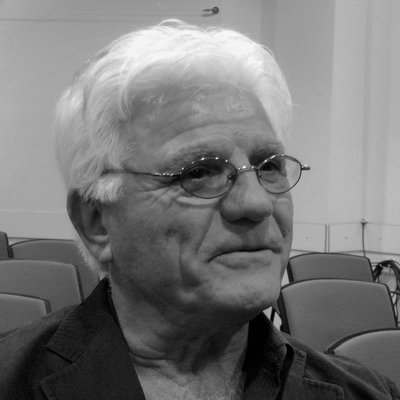
Reza Allamehzadeh In exile
Allamehzadeh worked for the National Iranian Radio and Television in the government of Mohammad Reza Shah Pahlavi before the 1979 Islamic Revolution. He was arrested in 1973 on charges of "taking the empress hostage for the release of political prisoners" and was sentenced to death which was later reduced to life imprisonment.
Luckily for him, he was released a few months before the Revolution, when the Shah of Iran released all political prisoners to appease the revolutionary forces.
"I was arrested at my home five years before the Revolution," Allamehzadeh told Radio Farda about his arrest. “I was first charged with taking Empress Farah hostage, and then other charges such as assassination were added. I was sentenced to death in two military courts. But a couple of months after being sentenced, my sentence was reduced to life imprisonment, and I was in prison until two months before the Revolution."
Allamehzadeh was arrested along with 11 other people, including Khosrow Golsorkhi and Keramatollah Daneshian, both of whom had left-wing political views, were journalists with the Kayhan daily newspaper and were eventually executed. The group was accused of trying to take Empress Farah or Crown Prince Reza Pahlavi hostage during the International Children and Youth Film Festival.
"Our charges were not the same," Allamehzadeh says. “Abbas Samakar and I worked for the National Iranian Radio and Television and had just graduated. I was a director and he was a cameraman. I had a film at the International Children's Film Festival, which was to be held a few months after our arrest, the movie 'Daar,' which was likely to win an award. We talked as two friends about taking action for the release of political prisoners and reading something at the festival. Samakar had mentioned the conversation to someone else and then others, and it was exaggerated and they associated it with the Golsorkhi group which had talked about the Shah's assassination at some other time. Eventually, SAVAK [the National Organization for Security and Intelligence] made a case out of nothing, it was just a conversation between a few colleagues."
Allamehzadeh was finally released a few months before the Revolution. He made the film "Speak Up Turkmen" three months after the Revolution which was about the war and dispute between people of Turkmen Sahra and the government of the Islamic Republic. His film faced protests from the revolutionaries and was banned.
A year later, he made another film, "Little Black Wise Fish," about Samad Behrangi, a poet who mysteriously died during the Pahlavi regime. This film was banned as well.
He made several other films in the following years, all of which were banned due to his leftist political views, and none of them were screened. He was later barred from holding government jobs. He left Iran in 1983, five years after the Revolution.
Allamehzadeh says: "All my films were banned in the four-and-a-half years after the Revolution. I even made a film about the siege of Abadan at the beginning of the Iran-Iraq war, which was also banned and not shown. Eventually they summoned me to Tehran when I was making a series for children and was filming in the north of the country. At that meeting, which was called the purge, there was a religious authority, and in the end I was sentenced to permanent dismissal from public office. I did not go to the next session of the court. In fact, I hid and I was smuggled to Turkey and then after a long time I was able to reach the Netherlands."
After leaving Iran, Allamehzadeh made documentaries such as "The Guests of Hotel Astoria" about immigration and Iranian immigrants, and "Iranian Taboo," about the persecution of the Baha'is in Iran. His latest film is "Tell Me of the Seas," which is about the killing of a number of prisoners by the Iranian government in the summer of 1988.
In addition to filmmaking, Allamehzadeh currently writes and publishes children's books on a regular basis and teaches documentaries at Hollins University in Virginia, Leeds Metropolitan University in the United Kingdom, and the International Radio and TV Training Center in the Netherlands.